FROM DISASTER RESPONSE TO DISEASE PREVENTION: NIGERIAN SCOUTS DELIVERING IMPACT WHERE IT MATTERS MOST
By turning training into action, volunteers of The Scout Association of Nigeria are proving that youth leadership is not only about preparation for the future—it is also about responding effectively to the crises of today.
When disaster strikes, the difference between chaos and coordinated action can save lives. Across Nigeria, volunteers of The Scout Association of Nigeria (TSAN) are demonstrating how non-formal youth education, leadership development, and emergency preparedness can translate into practical action on the frontlines.
From responding to an explosion in Oyo State to leading a large-scale cholera prevention campaign in Maiduguri, Borno State, Nigerian Scouts are showing how youth-led volunteerism can contribute directly to the achievement of the United Nations Sustainable Development Goals (SDGs).
These two operations—although different in nature—highlight the versatility and relevance of modern Scouting: responding to immediate emergencies while also building healthier, safer, and more resilient communities.
When a sudden explosion occurred in Oyo State, the emergency scene quickly became one of confusion, panic, and uncertainty. Smoke filled the area, casualties required urgent attention, and structural instability created additional risks for victims and responders.
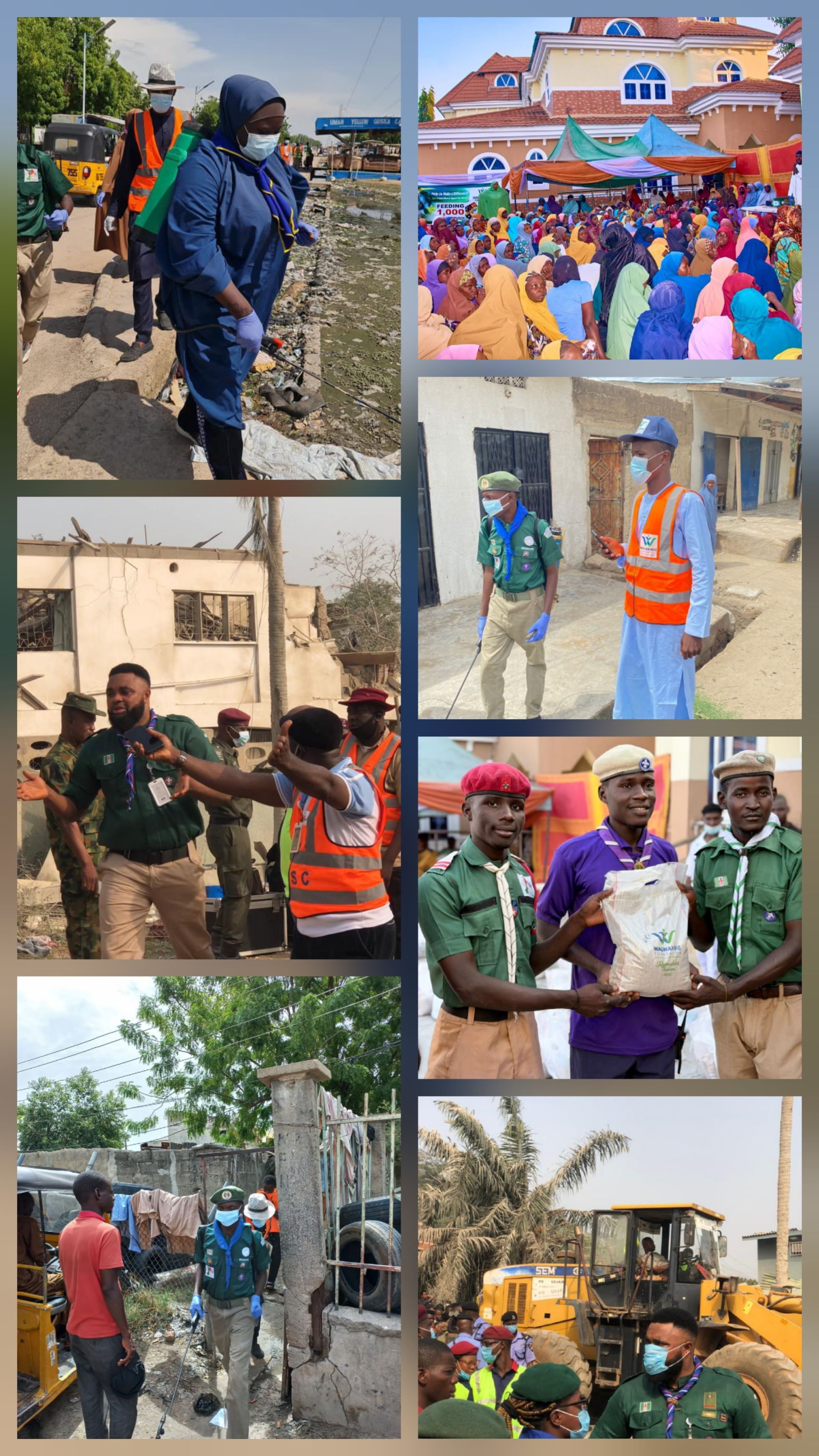
The TSAN Emergency Response and Rescue Team mobilised to the scene. Under the field leadership of Dr. Zack Ekanola, Chief Commissioner of TSAN, trained Scout volunteers helped bring structure to the emergency response.
Their intervention included establishing a field triage area, providing emergency first aid, stabilising casualties, and assisting with crowd control to ensure that emergency vehicles and ambulances could access the scene.
For the Scouts involved, the response was a practical demonstration of the value of preparedness.
“Scouting isn't just about ties and badges; it's about preparation for the worst days humanity faces. When an explosion occurs, every second saved in stabilization directly translates to a life preserved.”
The operation demonstrated that trained volunteers can play a meaningful role in strengthening emergency response systems, particularly during the critical period before victims reach medical facilities.
While the Oyo operation demanded an immediate response to a sudden disaster, the situation in Maiduguri, Borno State, presented a different challenge.
In the North-East, a cholera outbreak was compounded by seasonal flooding, poor sanitation conditions, and the vulnerability of communities affected by prolonged humanitarian challenges.
Under the leadership of the Borno State Scout Council, Scout volunteers took their response directly to the communities. The campaign reached thousands of households across several high-risk communities, transforming Scouting's commitment to service into a large-scale public health intervention.
Rather than waiting for communities to come forward, Scout volunteers went door to door, taking essential health and hygiene information directly to families.
Their activities included: disinfection and sanitation, household health, education and distribution of hygiene materials
Vulnerable households received essential supplies, including soap, clean water containers, and disinfectants to support disease prevention at household level.
The campaign demonstrated that effective public health action is not limited to hospitals and clinics. Community mobilisation, education, and preventive action are equally important in stopping the spread of communicable diseases. These services are in line with SDGs 3,6 and 17
The Oyo explosion and the Maiduguri cholera response were very different emergencies. One demanded immediate search, rescue, and first aid. The other required sustained community mobilisation and disease prevention.
Yet both responses revealed the same underlying strength: trained young people who are prepared to serve.
Together, these interventions demonstrate that Scouting is far more than an extracurricular activity. It is a platform for developing responsible citizens, community leaders, first responders, health advocates, and agents of sustainable development.
The Sustainable Development Goals are often discussed in terms of government policy, international programmes, and institutional development. However, their success ultimately depends on what happens in communities.
It is at the community level that people need access to clean water. It is at the community level that families need health information. It is at the community level that disasters must be managed and vulnerable people protected.
This is where youth-led organisations such as TSAN play an important role.
Through practical training, volunteer service, leadership development, and community engagement, Scouts are helping to translate global development goals into local action.
The lesson from Oyo and Maiduguri is clear: when young people are equipped with the right knowledge, skills, and values, they can become a powerful force for resilience and sustainable development.
From the smoke and urgency of an explosion site to the homes and communities confronting a public health emergency, Nigerian Scouts are demonstrating the true meaning of service.
They are not waiting for change to happen.
They are trained, organised, and stepping forward to make it happen.
Blessing Ihotu Ogwuche
TSAN Communication